Hydraulic Skid Steer Attachment Verified Manufacturers, Suppliers and Exporters with Quality Assurance
Hydraulic Skid Steer Attachment Verified Manufacturers, Suppliers and Exporters with Quality Assurance
Hydraulic skid steer attachments are critical tools for construction, landscaping, agriculture, demolition, recycling and industrial maintenance.
When these tools are sourced from verified manufacturers, suppliers and exporters with quality assurance,
end users benefit from longer service life, higher productivity and lower total cost of ownership.
This comprehensive industry overview is written in SEO-friendly English and structured for use on
blogs, directory pages and industry landing pages. It focuses on generic and technical information
without naming or promoting any specific company.
1. What Is a Hydraulic Skid Steer Attachment?
A hydraulic skid steer attachment is a work tool that mounts to the front coupler of a
skid steer loader and is powered by the machine’s hydraulic system. These attachments transform one basic
loader into a versatile multi-purpose machine capable of digging, lifting, cutting, drilling, grading,
compacting, sweeping and more.
A standard skid steer loader provides:
- A universal quick-attach mounting plate or coupler
- Hydraulic quick couplers for auxiliary hydraulic flow
- Electrical connectors for attachment control (where applicable)
The hydraulic skid steer attachment connects to these interfaces and uses pressurized oil from the loader
to drive hydraulic motors or cylinders inside the attachment.
1.1 Common Types of Hydraulic Skid Steer Attachments
Typical hydraulic skid steer attachment categories include:
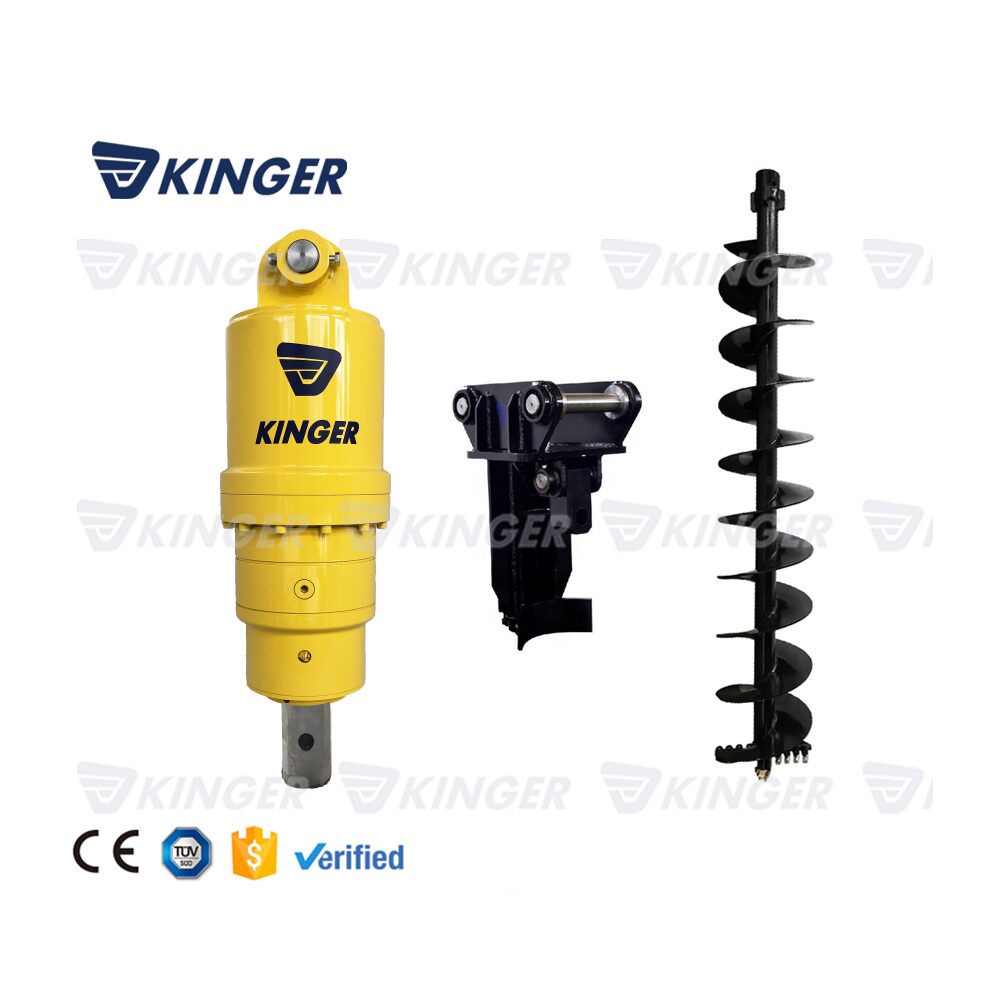
- Hydraulic augers for drilling holes
- Hydraulic breakers / hammers for concrete and rock demolition
- Hydraulic trenchers for utility and drainage trenches
- Hydraulic cold planers for asphalt and concrete milling
- Hydraulic brush cutters and Mulchers for land clearing
- Hydraulic grapples and grapple buckets for material handling
- Hydraulic snow blowers for snow removal
- Hydraulic stump grinders for stump removal
- Hydraulic sweeper brooms for road and site cleaning
- Hydraulic compactors for soil and trench compaction
Each hydraulic skid steer attachment has its own design, flow requirement, pressure rating and duty cycle
which must be matched with the capabilities of the host skid steer loader.
2. Why Work with Verified Manufacturers, Suppliers and Exporters?
The global market for hydraulic skid steer attachments includes thousands of producers and traders.
Quality, safety and after-sales support can vary widely. Working with verified hydraulic skid steer
attachment manufacturers, suppliers and exporters with quality assurance offers several key benefits:
2.1 Consistent Product Quality
- Attachments are built to consistent tolerances, ensuring proper fit to standard skid steer couplers.
- Hydraulic motors, valves, seals and cylinders are sourced from known component brands or verified equivalents.
- Welding, machining and heat treatment procedures follow documented quality standards.
2.2 Enhanced Safety and Compliance
- Design complies with relevant safety directives and standards for hydraulic equipment.
- Attachments include guards, decals, operator manuals and safety instructions in appropriate languages.
- Pressure ratings and hydraulic connections are clearly marked to avoid misuse.
2.3 Reliable Performance and Longevity
- Higher quality steels, wear parts and bearings lead to longer service life.
- Proper surface treatment and corrosion protection are applied for outdoor and harsh environments.
- Seals and hoses are rated for the correct working pressures and temperatures.
2.4 Professional After-Sales Support
- Availability of spare parts, wear parts and rebuild kits.
- Technical documentation such as exploded views and maintenance schedules.
- Remote technical support via email, video or phone for installation and troubleshooting.
2.5 Reduced Total Cost of Ownership
While products from verified manufacturers and suppliers may sometimes have a higher unit cost than
low-end alternatives, they usually reduce the total cost of ownership by:
- Minimizing downtime due to failures
- Lowering maintenance and repair frequency
- Improving work productivity due to robust performance
- Maintaining resale value of both the attachment and the skid steer loader
3. Key Quality Assurance Criteria for Hydraulic Skid Steer Attachments
Buyers, dealers and fleets looking for verified hydraulic skid steer attachment manufacturers, suppliers
and exporters should pay attention to several critical quality assurance criteria.
3.1 Certifications and Quality Management
- ISO 9001 certified quality management system for design and manufacturing
- CE marking for machinery and hydraulic attachments sold into the European Economic Area
- Compliance with ANSI/ISO standards applicable to quick couplers, hydraulics and safety
- Internal quality control (IQC), in-process quality control (IPQC) and final quality control (FQC) procedures
3.2 Material and Component Traceability
- Material certificates for structural steel, wear plate and cast components
- Batch or serial numbers for hydraulic motors, cylinders and valves
- Traceable lot numbers for seals, hoses and fittings
3.3 Welding and Structural Integrity
- Qualified and trained welders using WPS (Welding Procedure Specifications)
- Non-destructive testing (NDT) of critical welds for heavy-duty or high-pressure attachments
- Use of high-strength structural steels and abrasion-resistant plates where needed
3.4 Hydraulic System Testing
- Each hydraulic skid steer attachment tested under working pressure before shipment
- Leak tests for cylinders, motors and hose assemblies
- Flow and pressure performance verification according to design specifications
3.5 Documentation and Technical Files
- Operator’s manual and maintenance guide
- Exploded parts diagram and spare parts list
- Technical data sheet with flow, pressure, dimensions and weight
- Safety decals and labels with clear pictograms and instructions
4. Typical Technical Specifications for Hydraulic Skid Steer Attachments
The exact specifications of a hydraulic skid steer attachment will depend on its type and working function.
However, most attachments share a set of common technical parameters:
General Specification Parameters for Hydraulic Skid Steer Attachments
Specification Item |
Description |
Typical Range |
|---|
Compatible Skid Steer Class |
Horsepower or operating capacity class of host machine |
35–120 HP skid steer loaders |
Mounting Interface |
Quick-attach plate standard or coupler type |
Universal skid steer quick-attach, ISO/SAE couplers |
Required Hydraulic Flow |
Minimum and optimal hydraulic flow to drive the attachment |
Standard flow 50–90 l/min; high flow 90–150 l/min |
Required Hydraulic Pressure |
Working pressure rating of the hydraulic circuit |
170–240 bar (2500–3500 psi), depending on attachment |
Relief Valve Setting |
Internal relief to protect attachment hydraulics |
Typically 10–15% above working pressure |
Attachment Weight |
Operating weight including hoses and standard options |
150–1800 kg (330–3970 lb) |
Overall Dimensions |
Length, width and height for transport and operation |
Varies by type; often 1.2–2.2 m width |
Hydraulic Connection Type |
Quick coupler type and size for hydraulic hoses |
Flat-face quick couplers, 1/2" or 3/4" sizes common |
Operating Temperature Range |
Recommended ambient and fluid temperature range |
-20 °C to +50 °C (approx. -4 °F to 122 °F) |
Surface Treatment |
Protective coating against rust and abrasion |
Industrial primer plus polyurethane topcoat or powder coating |
Warranty Period |
Manufacturer’s warranty for structure and hydraulic components |
6–24 months depending on duty and market |
5. Specification Examples by Attachment Category
Below are generic, non-brand-specific specification examples for several popular hydraulic skid steer
attachment categories produced by verified manufacturers and exporters. These are intended as reference
values and not as a substitute for actual product data sheets.
5.1 Hydraulic Auger Attachments
Hydraulic auger drives are used to drill holes for fencing, foundations, landscaping and utility works.
They use a hydraulic motor and planetary gearbox to rotate the auger bit.
Typical Specification Range for Hydraulic Skid Steer Augers
Parameter |
Light Duty |
Medium Duty |
Heavy Duty |
|---|
Recommended Skid Steer Power |
25–45 HP |
45–70 HP |
70–100+ HP |
Hydraulic Flow Requirement |
35–65 l/min |
50–90 l/min |
80–130 l/min |
Working Pressure |
140–190 bar |
170–210 bar |
190–240 bar |
Output Torque Range |
900–2000 Nm |
2000–4000 Nm |
4000–8000+ Nm |
Auger Bit Diameter |
100–300 mm |
150–450 mm |
300–900 mm |
Drive Unit Weight |
60–110 kg |
90–160 kg |
150–260 kg |
5.2 Hydraulic Breaker Attachments
Hydraulic breakers, also called hydraulic hammers, are used for concrete demolition, rock breaking and
road maintenance. They convert hydraulic energy into high-frequency impact energy.
Typical Specification Range for Hydraulic Skid Steer Breakers
Parameter |
Small Class |
Medium Class |
Large Class |
|---|
Tool Diameter |
45–68 mm |
68–90 mm |
90–120 mm |
Impact Energy (Single Blow) |
200–500 J |
500–1000 J |
1000–2000 J |
Blow Frequency |
600–1200 bpm |
500–900 bpm |
400–800 bpm |
Hydraulic Flow |
30–60 l/min |
50–90 l/min |
80–130 l/min |
Working Pressure |
90–130 bar |
110–150 bar |
130–170 bar |
Breaker Weight (without skid plate) |
120–250 kg |
250–450 kg |
450–800+ kg |
5.3 Hydraulic Trencher Attachments
Hydraulic trenchers cut narrow trenches for cables, pipes and irrigation systems. They use a chain with
cutting teeth driven by a hydraulic motor and gearbox.
Typical Specification Range for Hydraulic Skid Steer Trenchers
Parameter |
Compact Trencher |
Standard Trencher |
Heavy-Duty Trencher |
|---|
Trench Width |
100–200 mm |
150–300 mm |
200–400 mm |
Maximum Trench Depth |
600–900 mm |
900–1200 mm |
1200–1500+ mm |
Hydraulic Flow Requirement |
45–75 l/min |
60–95 l/min |
90–140 l/min |
Working Pressure |
170–210 bar |
170–230 bar |
190–240 bar |
Chain Speed |
0.8–1.5 m/s |
0.8–2.0 m/s |
1.0–2.5 m/s |
Attachment Weight |
250–450 kg |
400–650 kg |
600–1000 kg |
5.4 Hydraulic Brush Cutter / Mulcher Attachments
Hydraulic brush cutters and mulchers are used in land clearing, vegetation management, forestry and
roadside maintenance. They may have direct drive or belt drive hydraulic motors.
Typical Specification Range for Hydraulic Skid Steer Brush Cutters
Parameter |
Light Brush Cutter |
Standard Brush Cutter |
Forestry Mulcher |
|---|
Cutting Width |
1200–1500 mm |
1500–1800 mm |
1500–2000 mm |
Maximum Cutting Diameter |
40–75 mm shrubs |
75–100 mm trees |
150–250 mm hardwood |
Hydraulic Flow Requirement |
50–80 l/min |
70–110 l/min |
90–150 l/min (high flow) |
Working Pressure |
170–220 bar |
190–240 bar |
200–250 bar (depending on motor) |
Rotor Speed |
1200–1800 rpm |
1100–1700 rpm |
1800–2200 rpm |
Attachment Weight |
300–550 kg |
450–800 kg |
900–1800 kg |
6. Materials and Design Features from Verified Producers
Verified hydraulic skid steer attachment manufacturers and exporters employ specific material choices and
design features to ensure quality and durability.
6.1 Structural Materials
- High-strength low-alloy (HSLA) steel for main frames and structural arms
- Abrasion-resistant (AR) plate or wear-resistant steel for buckets, cutting edges and ground-engaging parts
- Cast steel or ductile iron for high load pivot points and housings
- Heat treatment processes to increase strength and toughness of critical components
6.2 Hydraulic Components
- High-torque hydraulic motors with integrated relief valves
- Heavy-duty cylinders with induction-hardened chrome-plated rods
- High-pressure hoses with abrasion-resistant outer covers and crimped fittings
- Cartridge valves and manifolds designed for compact, leak-free operation
6.3 Protective and Safety Features
- Heavy-duty guards over rotating or high-speed components
- Built-in check valves to prevent uncontrolled movement in case of hose failure
- Flow dividers and priority valves to optimize oil distribution
- Pressure gauges or test ports for service diagnostics
6.4 Coupler and Interface Design
- Precision-cut quick-attach plates ensuring smooth mounting and dismounting
- Standardized pin and bush dimensions to fit major skid steer brands
- Optional bolt-on or weld-on adapters for different coupler systems
7. Application Areas for Hydraulic Skid Steer Attachments
Attachments from verified hydraulic skid steer attachment manufacturers and exporters are widely used in
multiple sectors. Common application areas include:
- Construction and civil engineering – demolition, site preparation, trenching and road work
- Landscaping and grounds maintenance – soil preparation, tree management, fencing and drainage
- Agriculture and livestock – material handling, feed management, digging and cleaning
- Forestry and land clearing – mulching, brush cutting and stump grinding
- Municipal and public works – snow removal, street cleaning and infrastructure repairs
- Recycling and waste management – sorting, loading, breaking and compacting materials
- Mining and quarrying – rock breaking, scaling and material handling in confined spaces
8. How to Select Hydraulic Skid Steer Attachments from Verified Suppliers
Selecting the right hydraulic skid steer attachment and a reliable, verified source is critical for safety
and productivity. The following steps provide a structured approach.
8.1 Define the Application Requirements
- Type of material to be handled (soil, rock, concrete, vegetation, snow, waste)
- Daily working hours and expected duty cycle (intermittent, regular, continuous)
- Desired performance (cutting depth, trench width, impact energy, drilling diameter)
- Site constraints (noise limits, access, visibility, dust control)
8.2 Check Compatibility with the Skid Steer Loader
- Hydraulic flow and pressure available (standard flow or high flow)
- Skid steer operating weight and tipping load
- Electrical connections for any attachment with electronic control
- Quick-attach plate type and any OEM-specific coupler requirements
8.3 Evaluate Technical Data Sheets
- Confirm minimum and optimal hydraulic flow requirements
- Check maximum working pressure and relief settings
- Compare attachment weight with machine lift capacity
- Assess wear part availability and replacement intervals
8.4 Verify Supplier and Manufacturer Credentials
- Ask for copies of certifications (e.g., ISO 9001, CE declarations)
- Review sample inspection reports or factory test records
- Request references from other dealers or fleet customers
- Check export experience to your target region (documentation, packaging, incoterms)
8.5 Total Cost and Support Considerations
- Evaluate price against included features, warranty and parts support
- Compare lead times and minimum order quantities
- Clarify technical training, installation assistance and troubleshooting channels
- Confirm availability of exploded diagrams and digital manuals
9. Typical Quality Assurance Process Used by Verified Manufacturers
Verified hydraulic skid steer attachment manufacturers generally implement a structured quality assurance
process throughout design, production and shipment.
9.1 Design and Prototyping
- Computer-aided design (CAD) and finite element analysis (FEA) for structural components
- Hydraulic circuit simulation to verify flow and pressure performance
- Prototype testing under simulated job site conditions
9.2 Incoming Material Inspection
- Dimensional checks for key components such as bushings, pins and machined parts
- Verification of steel grade and hardness for wear parts
- Random sampling of hydraulic components for performance testing
9.3 In-Process Quality Control
- Weld inspection and measurement of weld sizes according to drawings
- Verification of critical dimensions at jigs and fixtures
- Torque checks for bolted joints on gearboxes, motors and shafts
9.4 Final Testing and Inspection
- Hydraulic function testing at specified flow and pressure
- Leak testing of cylinders, hoses and rotary unions
- Paint thickness measurement and visual inspection for defects
- Verification of decals, safety labels and documentation packets
9.5 Packaging and Export Preparation
- Attachment secured on pallets or steel skids suitable for container transport
- Hose ends capped to prevent contamination
- Corrosion protection for exposed machined surfaces
- Clear labeling with model, weight and center of gravity for safe handling
10. Global Sourcing of Hydraulic Skid Steer Attachments
The global supply chain for hydraulic skid steer attachments involves specialized factories, regional
distributors and export-oriented trading companies. Buyers can work directly with verified
manufacturers, suppliers and exporters in different regions, depending on their own distribution
strategy.
10.1 Direct Factory Sourcing
- Ideal for OEMs, large dealers and rental fleets looking for private-label or custom designs
- Typically lower unit cost at higher minimum order quantities
- Direct access to engineering teams for product customization
10.2 Regional Distribution and Importers
- Useful for smaller dealers or end users needing quick local availability
- Access to regional stock, service teams and spare parts inventory
- Import logistics, customs and compliance handled by the distributor
10.3 Export-Focused Trading and Integration Companies
- Can consolidate multiple types of hydraulic skid steer attachments into one shipment
- Useful for mixed container loads and cross-brand combinations
- May handle documentation and inspection for various destinations
11. Frequently Asked Technical Questions
11.1 Can any hydraulic skid steer attachment fit any skid steer loader?
Not all attachments fit all loaders. Compatibility depends on the quick-attach standard,
hydraulic flow and pressure, electrical connections and the loader’s lift capacity.
Verified suppliers publish compatibility tables and can confirm fitment based on loader model and
attachment requirements.
11.2 What is the difference between standard-flow and high-flow attachments?
Standard-flow skid steer circuits typically provide around 50–90 l/min of flow, while high-flow
circuits provide 90–150 l/min or more. Some heavy-duty attachments, such as cold planers or forestry
mulchers, are specifically designed as high-flow hydraulic skid steer attachments and will not perform
correctly on standard flow systems. Conversely, some standard-flow attachments may be damaged if
connected to high-flow circuits without proper control.
11.3 How important is flow matching between the loader and attachment?
Proper hydraulic flow matching is critical. Too little flow leads to underperformance and slow operation.
Excessive flow can overheat the oil, damage motors and reduce the life of seals and hoses. Verified
manufacturers provide recommended flow ranges and may supply or specify flow control valves if needed.
11.4 How often should hydraulic skid steer attachments be serviced?
Service intervals depend on the specific attachment and working conditions, but common checks include:
- Daily: Visual inspection, grease points, hose and fitting checks
- Weekly: Bolt torque checks, blade or tooth wear checks
- Monthly: Filter and oil contamination inspection on attachments with separate reservoirs
- Annually or at specified operating hours: Seal replacement, bearing inspection and structural checks
Verified manufacturers include detailed maintenance schedules in their technical manuals.
12. SEO-Focused Notes for Industry Pages and Directories
When building an industry page or directory listing for hydraulic skid steer attachment verified
manufacturers, suppliers and exporters with quality assurance, it is useful to:
Clear, technical and well-structured content helps search engines understand the relevance of the page and
assists buyers searching globally for reliable, export-ready hydraulic skid steer attachments.
13. Conclusion
Hydraulic skid steer attachments significantly enhance the capability of skid steer loaders in construction,
landscaping, agriculture, forestry, demolition and municipal operations. Sourcing these attachments from
verified manufacturers, suppliers and exporters with robust quality assurance systems helps
ensure safety, durability and productivity.
By focusing on design quality, certified production processes, tested hydraulic performance and documented
specifications, buyers can confidently integrate hydraulic skid steer attachments into their fleets and
maximize return on investment. This industry-focused, neutral overview can be integrated into blogs,
directories and sector-specific landing pages to support informed purchasing decisions and global sourcing
strategies.
```



 English
 Español
 Portugues
 Français
 Italiano
 Nederlands
 Polski
 lietuvių
 Hrvatski



 Whatsapp
 Telefon
cometariu
(0)